8 Ways to Crack US GTM from India
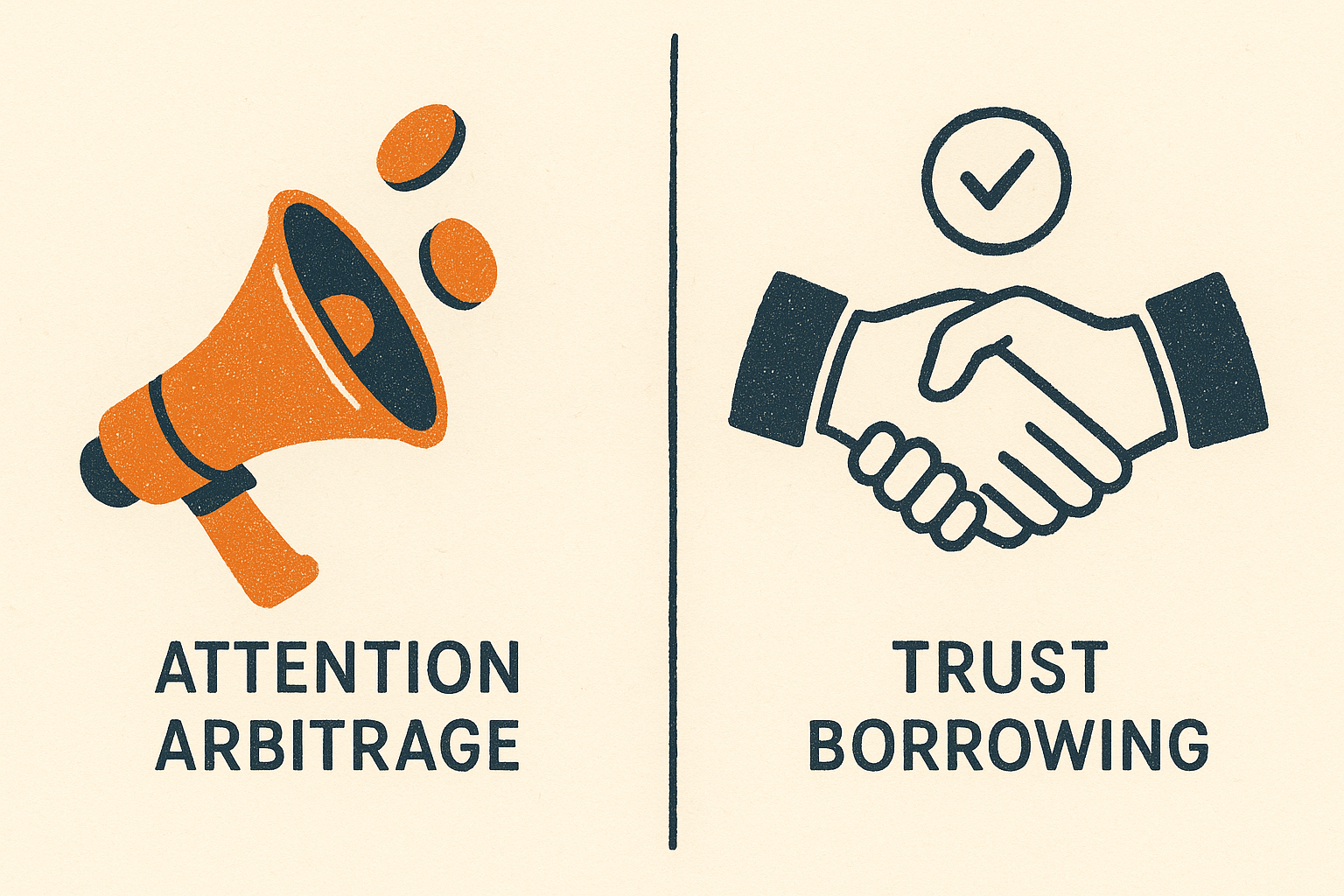
India→US GTM fails for one reason. You're asking for trust in a market where nobody has met you. Every fix that actually works is one of two moves: you buy attention where it's still cheap, or you borrow trust someone else already earned.
This list comes from a call with operators selling into the US right now. I then fact-checked every number they threw around. Most survived. My favourite one didn't (the tidy "X costs one-seventh of LinkedIn" ratio turned out to be folklore), so I've kept the corrections visible, because a listicle of unverified numbers is exactly the kind of content this market drowns in.
Eight channels. Two moves. You'll want one of each.
1. X ads, while the price gap holds
LinkedIn charges roughly $34 per thousand impressions to reach US tech decision-makers. X reaches a large overlap of the same people for $2–7, depending on targeting. A 5–10x gap on the same buyers, not the fixed ratio from the group-chat version. And it's widening: X CPCs fell about 9% year-on-year in 2025 because advertisers keep leaving faster than the audience does.
The play:
- Build a follower-lookalike audience from your competitors' followers, plus keyword targeting on the problems you solve.
- Run native video, 30–60 seconds, captions on (most viewing is sound-off). Native video earns a multiple of the engagement that external links get.
- Geo-target the US only. You're not buying Indian impressions by accident.
- Schedule for US weekday mornings, Eastern. B2B engagement sags on Fridays and dies at weekends.
CPCs land between $0.50 and $2. CTR benchmarks run 0.9–3%. There's no minimum budget, so $20–50 a day gets real signal, and $500–1,500 over two or three weeks tells you whether the channel works for you. Send clicks to a lead magnet, not a demo form. Cold X traffic warms; it almost never closes.
Best for dev tools, AI products, fintech, anything whose buyers live on tech Twitter.
2. Reddit, where US buyers complain in public
The claim from the call: scrape relevant subreddits, DM people manually, convert as high as 60%. I wanted this one to be true more than anything else on the list.
It is, but only under strict conditions. The person publicly posted about the exact pain you solve, recently, and your DM quotes their own words back at them. That isn't cold outreach. That's answering a raised hand. Blast DMs on Reddit and you'll convert near zero, then get banned.
Why bother, then? Because Reddit is where US buyers go to be honest. A thread in r/SaaS asking "how do I do this without paying $10K a month" is a bleeding-neck lead no database sells. Intent this sharp exists nowhere else on this list, just never in volume: expect a handful of qualified conversations a week.
How to run it: F5Bot is free and watches keywords across 10–15 subreddits where your ICP complains. (GummySearch, the tool everyone recommended for this, shut down in November 2025 when Reddit's API pricing killed it. Syften is the paid replacement.) Reply publicly first with genuinely useful help, no link unless asked. DM only as a follow-up to that public exchange. Disclose you're the founder when your product comes up; Redditors forgive founders and execute marketers.
One more reason this compounds: Reddit remains the single most-cited source across AI assistants. Your helpful public comment is also a GEO asset (see method 4). And one public callout ("this company spams Reddit") is negative GEO forever, which is why you never automate the DMs.
3. Commission-only US reps, auditioned for $50
The cleverest tactic from the call. Post a role on Upwork, pay 8–10 American candidates $25–50 each for a 30-minute "consulting call", and watch them pitch your product back to you live (mildly awkward, completely worth it). You're auditioning voice, energy and objection handling for the price of a dinner. The good ones get offered a commission-only contract.
What the number actually is: salaried SaaS reps earn 10–20% commission on top of a base. Independent, full-cycle, no-base reps run 20–50% of first-year revenue, and the fat middle of that range is 20–30%. Think of it as 2–3x the salaried rate, because they carry all the risk. The 40–50% end is real but belongs to small-ticket products or reps bringing their own pipeline. And 50% of a deal you'd never have closed still beats 100% of nothing.
Where to find them beyond Upwork: CommissionCrowd, a marketplace where independent B2B reps browse lines to carry (about 2,000 live listings). Give each rep a tight one-page contract: rate, when commission is earned versus paid, territory, a 90-day clawback if the customer churns, contractor status. Lawyer reviews it once, you reuse it forever.
Two warnings. Pay fast and visibly; commission reps talk to each other, and being a good principal is your retention strategy. And hold weekly check-ins, because a rep carrying four lines silently drops the one that's hardest to sell. Works best above $2–3K deal size, where they can see the payday.
4. ChatGPT: be the answer, and now the ad
G2's 2026 buyer survey found 51% of B2B buyers now start vendor research in AI chatbots, up from 29% a year earlier. Half your market asks a machine who to shortlist, and the machine doesn't know or care where your company is headquartered. This is the most geography-blind channel that has ever existed.
Two plays, one organic, one brand new.
Organic (GEO). Publish answer-first content: Q&A structure, tables, your claim near the top of the page. The highest-citation content type is original research with novel data; one real report ("we analysed 200 X and found Y") outperforms twenty opinion posts. Be present where the assistants read: Reddit threads (method 2 again) and third-party comparison pages. Review-site listings correlate with getting included in answers, though the visible citations skew heavily to Reddit and comparison content rather than G2 itself. Let OAI-SearchBot through your robots.txt; it sounds trivial and blocks everything when wrong. Track by running 50 representative buyer prompts monthly and counting mentions, or pay for a tool like Profound once that gets old. Expect three to six months from a standing start. Skip GEO agencies at your stage; typical retainers run $2–8K a month for work you can do yourself.
Paid. OpenAI switched on ads in ChatGPT in February 2026, and the self-serve Ads Manager (ads.openai.com, still in beta) opened this spring with CPC bidding and no minimum spend. OpenAI's recommended starting bids are $3–5 per click; observed CPCs aren't public yet. The window is the point: the pilot hit roughly $100M annualised within six weeks, and reported CPMs already fell from about $60 to $25 by April as inventory opened. Early-channel arbitrage with a visible countdown. Two practical notes for India→US: ads currently reach US users first (Canada, Australia and New Zealand went live in April, more countries rolling out), and advertiser accounts require a US/CA/AU/NZ entity, so your Delaware C-corp finally earns its keep. B2B software qualifies; healthcare, fintech and legal don't yet.
This is the one channel on the list nobody gets to skip.
5. Launch platforms are four different machines
People say "launch on Product Hunt" the way they say "do marketing". The four platforms sell different things.
Product Hunt sells credibility. Harder than it used to be: since late 2024, only about one launch in ten gets featured, and a non-featured launch loses roughly 70% of its visibility no matter how it votes. If you do get featured, reply to every comment within minutes (one substantive comment correlates with as much ranking lift as 40–50 upvotes) and bring your own audience for the first hours. The durable prize is the badge. A US buyer landing on an unknown Indian startup's site sees "Product of the Day" and files you under legitimate. That badge keeps paying for years, which is why the day itself matters less than everyone thinks.
Hacker News sells technical reach, slowly. HN distrusts green accounts. Comment genuinely for months before a Show HN; a launch from a fresh account dies at birth. Technical honesty, no marketing voice, show the build.
AppSumo sells revenue. The only launch that pays cash: partners keep 95% of revenue on buyers they bring and 70% on AppSumo-sourced buyers, and six-figure months genuinely happen. The costs: deep discounts, lifetime-deal buyers who rarely become subscribers, and a real support burden. Do it for cash and users on a stable product, not for your ICP.
G2 and Capterra sell trust at the moment of comparison. (Soon one company: G2 announced it's acquiring Capterra from Gartner in January 2026.) Listings are free. Then run a review campaign: personal asks to happy users, incentives up to $100 on G2 with automatic disclosure. Keep reviews fresh; a profile whose last review is two years old reads as dead. These reviews also feed the AI answers from method 4.
Sequence launches weeks apart (PH, then Uneed or Peerlist or Microlaunch, then HN). The audiences barely overlap, and each launch tunes the next.
6. Cold calling the US, from the timezone that makes it easy
Everyone left the phone for the inbox. That's the opportunity. Connect rates industry-wide sit near 5%, which sounds grim until you do the maths: a three-hour calling block yields 8–12 live conversations with US buyers, from Bengaluru, same day. And your geography is an advantage for once, because Indian evening is US East Coast morning, the best calling window that exists.
Data quality decides this channel before any dialler does. Cognism's 2026 benchmarks put verified mobile numbers at 18–22% connect rates versus 8–12% for generic data. The classic failure is an expensive parallel dialler pointed at 40% dead numbers.
Tooling ladder: start with JustCall (India-founded, from about $29 per user a month) or Kixie (list price $35–95, unlimited US/Canada minutes, but annual prepay is mandatory under ten seats and add-ons push real cost well past list). Graduate to a parallel dialler like Orum or Nooks only when someone calls full-time; both run roughly $250–420 a seat with annual contracts and multi-seat minimums, so the real floor is $5–9K a year. Buy US local-presence numbers, rotate them, and watch for "spam likely" labels, because number reputation is half the game now.
Compliance, quickly: TCPA plus a growing pile of state mini-TCPAs (Texas tightened its version in September 2025). B2B calls to business numbers are the lower-risk lane. Skip predictive diallers (abandoned-call rates create legal exposure) and don't point AI voice agents at cold US prospects; that's currently a brand and legal minefield. Call as a follow-up layer on people who opened your emails or visited the site, and don't judge the channel in week one. The script on call 200 is unrecognisable from call 1. Best above $5K deal size, and secretly the fastest market research you can buy: Americans will tell you "no" with reasons attached, in real time.
7. Referrals, engineered instead of awaited
The only channel where your message arrives pre-trusted. Every other method on this list fights the "who is this Indian company" tax; a referral deletes it. The problem is that referrals don't scale on demand, so the play is engineering luck.
"Do you know anyone who needs this?" gets nothing. "Do you know a Head of Ops at a 50–200 person e-commerce company drowning in returns?" gets names. Specificity is the entire technique. Ask at the peak, the moment a customer hits their first win, not at signup and not at renewal (practitioner consensus, this one, not a study).
Then make it structural. Two to four US advisors with real networks, at 0.1–0.25% equity each, with one explicit job: introductions. Per qualified meeting, cheaper than anything else here. Make referring take under 60 seconds with a forwardable blurb they can send as-is. And when you add incentives, reward the friend rather than the referrer; research on referral programmes (Gershon's work, if you want the citation) found conversion rises when the referred person gets the reward, so an extended trial for their friend beats a kickback for them. Never pay customers cash for B2B referrals. It converts advocates into contractors and cheapens the signal.
Less a channel than a discipline, and it starts with customer #1.
8. Newsletters, then affiliates
Renting the trust of someone your buyer already reads. Newsletter readers opted in, so a recommendation there carries editorial weight no paid social ad gets. B2B niche newsletters are surgical: 10,000 subscribers who are all US engineering managers beat 500,000 randoms.
Pricing so you don't get fleeced: sponsorship CPMs run $10–75, with specialised B2B niches at $50–100+. Under about 50K subscribers, expect flat fees rather than CPMs. Marketplaces bake in roughly a 30% commission, so book your first tests there for speed, then go direct to whatever performed. Paved is free for advertisers and its ad network starts at $50 a day on $1.10–6 CPCs, which means you can start on performance pricing instead of flat-fee gambles. Passionfroot handles direct bookings. beehiiv's ad network is a managed product with a $15K minimum, so file it under "later". Bundling three or more placements with one publisher typically earns 10–20% off, more if you negotiate well.
Ask five customers what's actually in their inbox before trusting any directory; that list of 20 newsletters beats anything you can buy. Test small across 3–5 of them before any dedicated send. One will outperform the rest 5:1 and you can't predict which, and newsletter audiences buy on the second or third exposure, so judge on repetition, not on one send. When a writer converts, offer 20–30% recurring revenue share and they become your affiliate, incentivised to keep mentioning you.
The comparison, honestly
| Method | Cost to start | First signal | Scales? | Stage |
|---|---|---|---|---|
| X ads | $500–1.5K | 1–2 weeks | Yes | Any |
| Reddit DMs | ~$0 | Days | No, and that's fine | Pre-PMF gold |
| Commission reps | $200–500 (auditions) | 4–8 weeks | Medium | Post first sales |
| ChatGPT: GEO + ads | $0 organic / ~$500 paid | Paid: days. Organic: 3–6 months | Compounds | Now, regardless |
| Launch platforms | ~$0 | Launch day | One-shot each | Once per product |
| Cold calling | $30–100/mo tools | 2–4 weeks | With reps | Deals $5K+ |
| Referrals | $0 | Immediate if asked right | Slowly, compounds | Customer #1 |
| Newsletters | $300–2K/test | 1–2 sends | Yes | Post-messaging fit |
Pick two
None of these work alone. Pick one arbitrage play and one trust play and run both for a quarter. Pre-PMF, I'd pair Reddit with referrals: highest intent, lowest cost, and both force you to hear buyers describe the pain in their own words. With messaging that converts, pair X ads with newsletter tests. And build the ChatGPT presence in the background regardless, because half your buyers now start there and the other half will.
Which two are you running? Reply, especially if your numbers disagree with mine. Every stat above survived a fact-check this week, but markets move faster than posts, and the corrections are the most useful part of publishing these.
This is the first post in a longer run on GTM messages and channels, so what you send back genuinely steers what I write next.